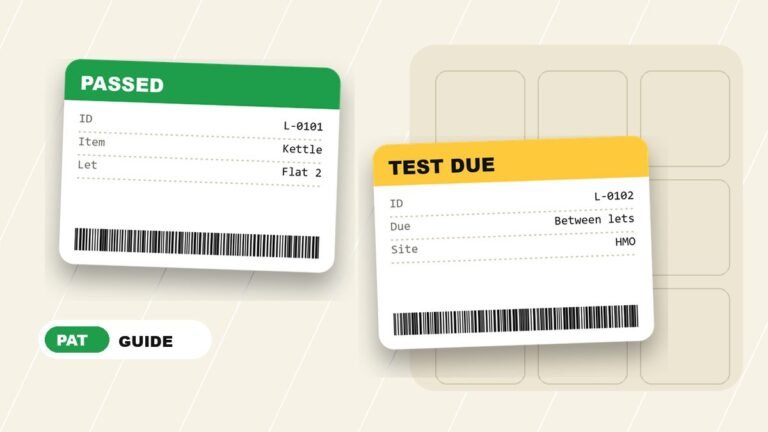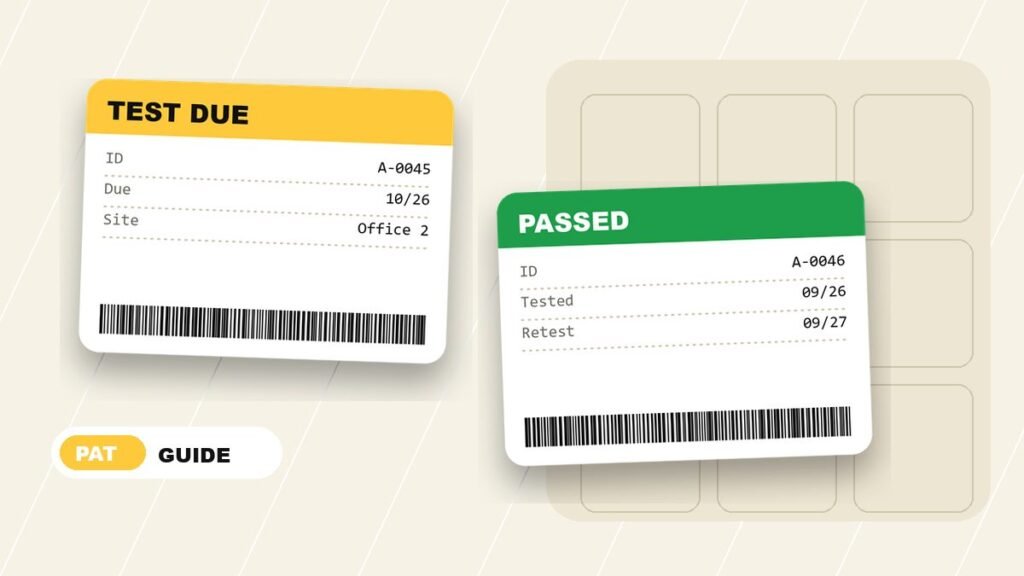
“Once a year” is the answer most people have heard, but it isn’t written into law. The Electricity at Work Regulations 1989 require equipment to be maintained so it’s safe, and leave it to you to decide how often it’s inspected and tested.
Start from the environment
The IET Code of Practice and HSE guidance suggest starting intervals based on how much wear and tear equipment sees. A desk lamp in a quiet office leads a very different life from a drill on a building site.
- Offices and shops: Class I items commonly every one to two years
- Schools and nurseries: around once a year
- Hotels and hospitality: one to two years, more often for heavily used kit
- Care settings: every six to twelve months
- Construction sites: 110V tools and leads roughly every three months
Visual checks in between
Most faults are found by looking: damaged leads, cracked casings, scorched plugs. Simple user checks before use, and more formal visual inspections between full tests, catch problems early and let you safely stretch the interval for low-risk items.
Adjust with your results
Your asset register is the best guide. If a type of equipment keeps failing, shorten its interval. If an area passes cleanly year after year, you may be able to extend it. Record the reasoning in your risk assessment so the decision is easy to explain.
The interval is yours to set. Guidance gives the starting point; your risk assessment decides the final number.