Every appliance that gets PAT tested is first identified by its construction class. It sounds technical, but it simply describes how the appliance protects you if something goes wrong inside, and that decides which tests apply.
Class I: earthed
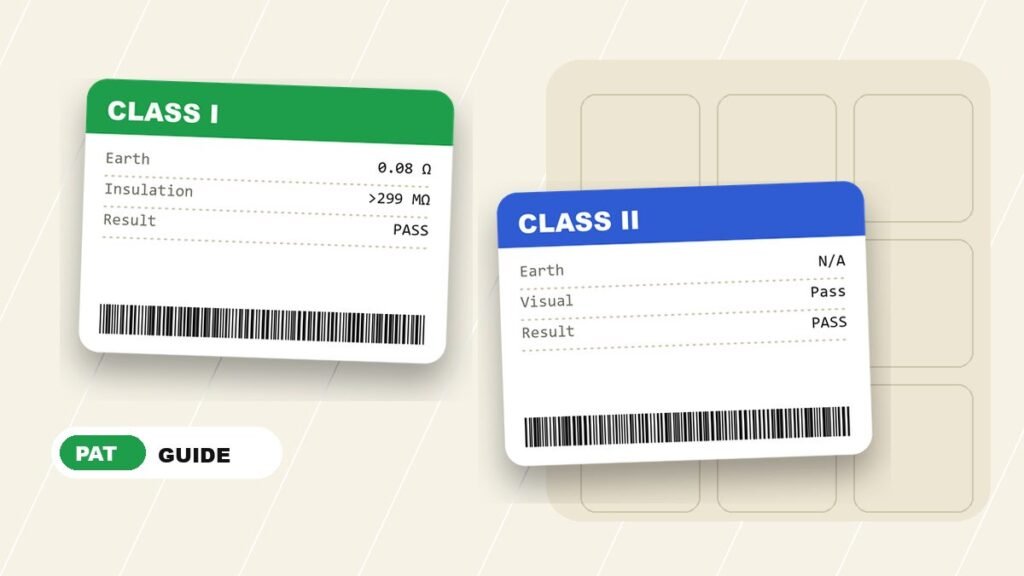
Class I appliances usually have a metal casing and rely on the earth wire to carry fault current safely away. Kettles, toasters, microwaves, heaters and desktop PCs are typical. They get the full routine: a visual inspection, an earth continuity test, an insulation resistance test and a functional check.
Class II: double insulated
Class II appliances carry the double-square symbol on their rating plate. They don’t need an earth, because protection comes from two layers of insulation. Hairdryers, lamps, TVs, vacuums and most chargers fall into this group.
There’s no earth test, but they still get a visual inspection and usually an insulation test. In practice, the visual check is where most Class II faults are found.
Leads and extensions
Extension reels, IEC kettle leads and cord sets are tested in their own right, including polarity and continuity, because a faulty lead can make a perfectly good appliance dangerous.
- Look for the double-square symbol to spot Class II
- No symbol and a three-core lead usually means Class I
- Every lead and extension gets its own label and register entry